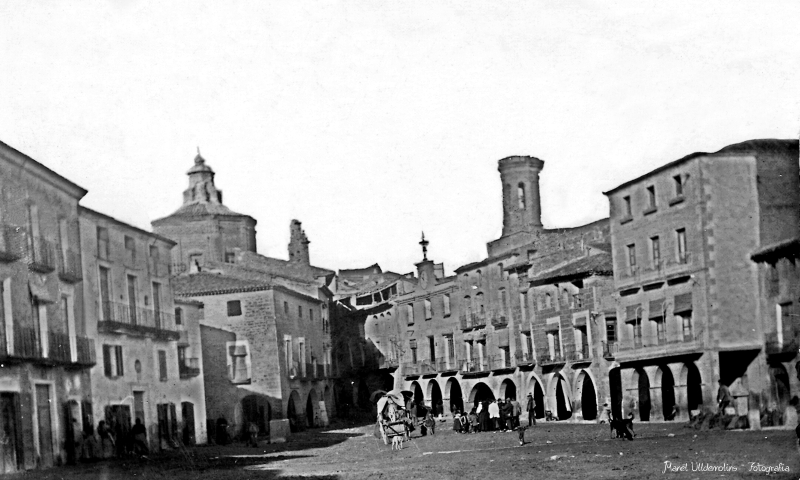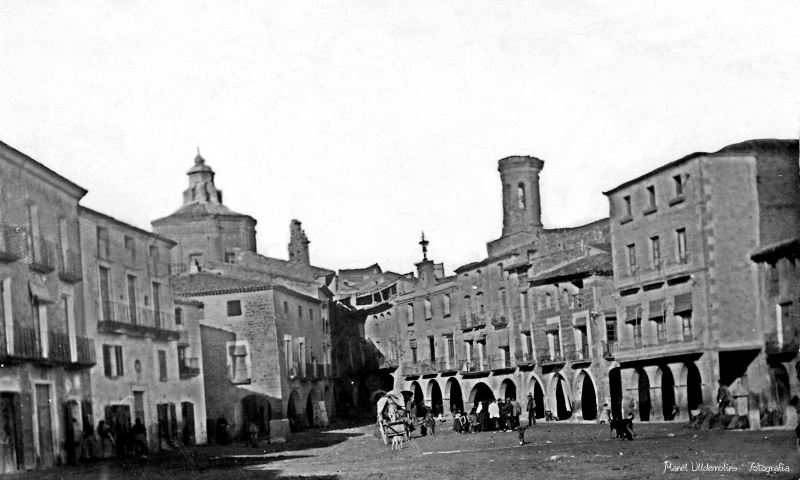
Historical overview of the town of Batea
Some historians have identified Batea with an important city of Ilercavonia (mentioned by Ptolemy) known as Adeba. There is some uncertainty about this assumption, but it is clear that Batea, like the rest of the towns in the Terra Alta region, has protohistoric origins.
Remains of several Iberian settlements have been found within the municipal area of Batea. There is also a 3-kilometer stretch of an ancient Roman road that once connected the port of Dertusa (Tortosa) with inland cities of the province of Tarraconensis, such as Ilerda (Lleida) and Caesaraugusta (Zaragoza). The route corresponds to the old Camí dels Massalocans, which runs from Batea to La Pobla de Massaluca, and it is the main trace left from the Roman presence in the area.
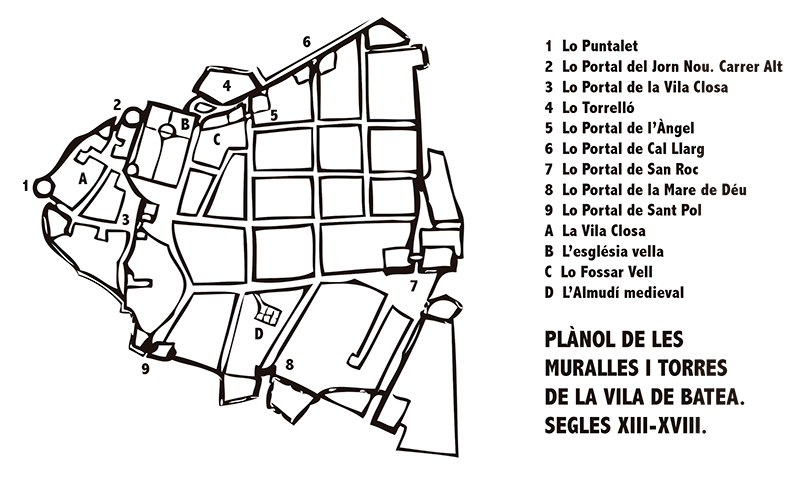
After the territory was taken from the Arabs in 1153, Batea appears for the first time in a written document: the donation charter granted by Ramon Berenguer IV to the Templars of Miravet. In 1181, two concessions by Alfonso I refer to Batea and the Algars area. He granted a settlement charter to future residents under the Fuero of Zaragoza, while at the same time granting the two castles, under the Fuero of Barcelona, to the knight Bernat Granell, who put it into effect. A few years later, the Templars claimed and recovered control of Batea and Algars.
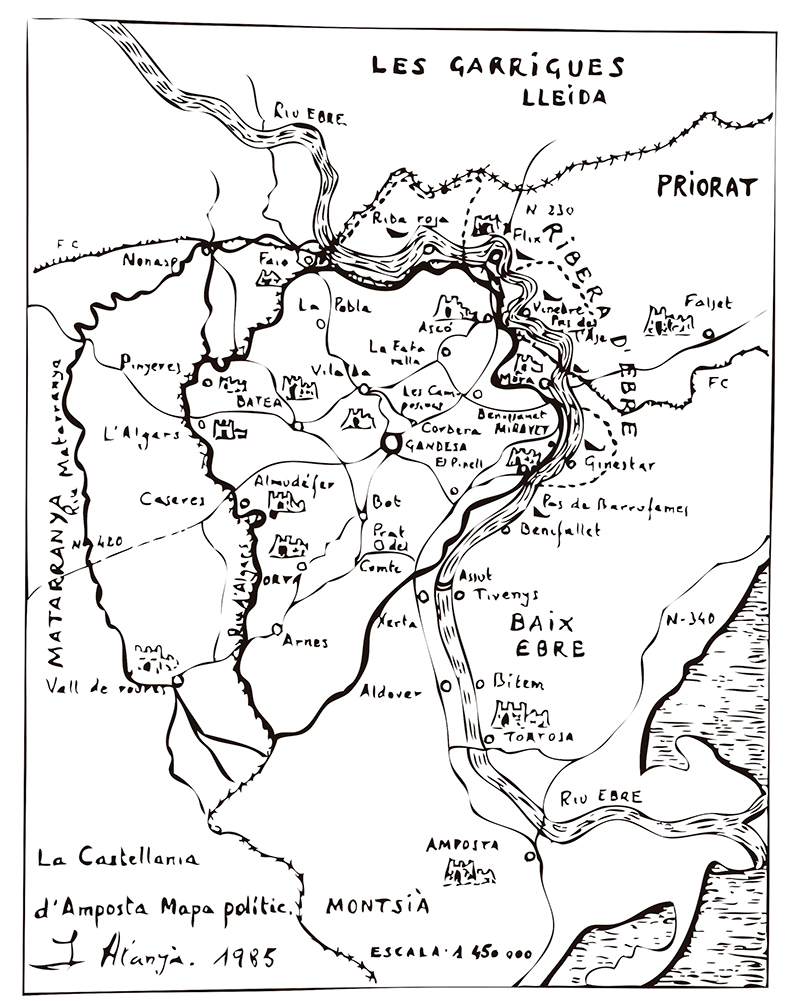
When the Hospitallers inherited the Templars’ possessions in 1317, Batea, Pinyeres, and Algars became part of the Bailiwick of Miravet, which would later be known as the Castellany of Amposta.
After several centuries marked by wars and epidemics, the 18th century brought economic and demographic prosperity. This was reflected in the construction of the new parish church of Sant Miquel, the expansion of agriculture beyond the municipal boundaries, and the growth of the town.
During the Spanish Civil War (1936–1939), the town was located behind the Ebro front, and many field hospitals were set up there.